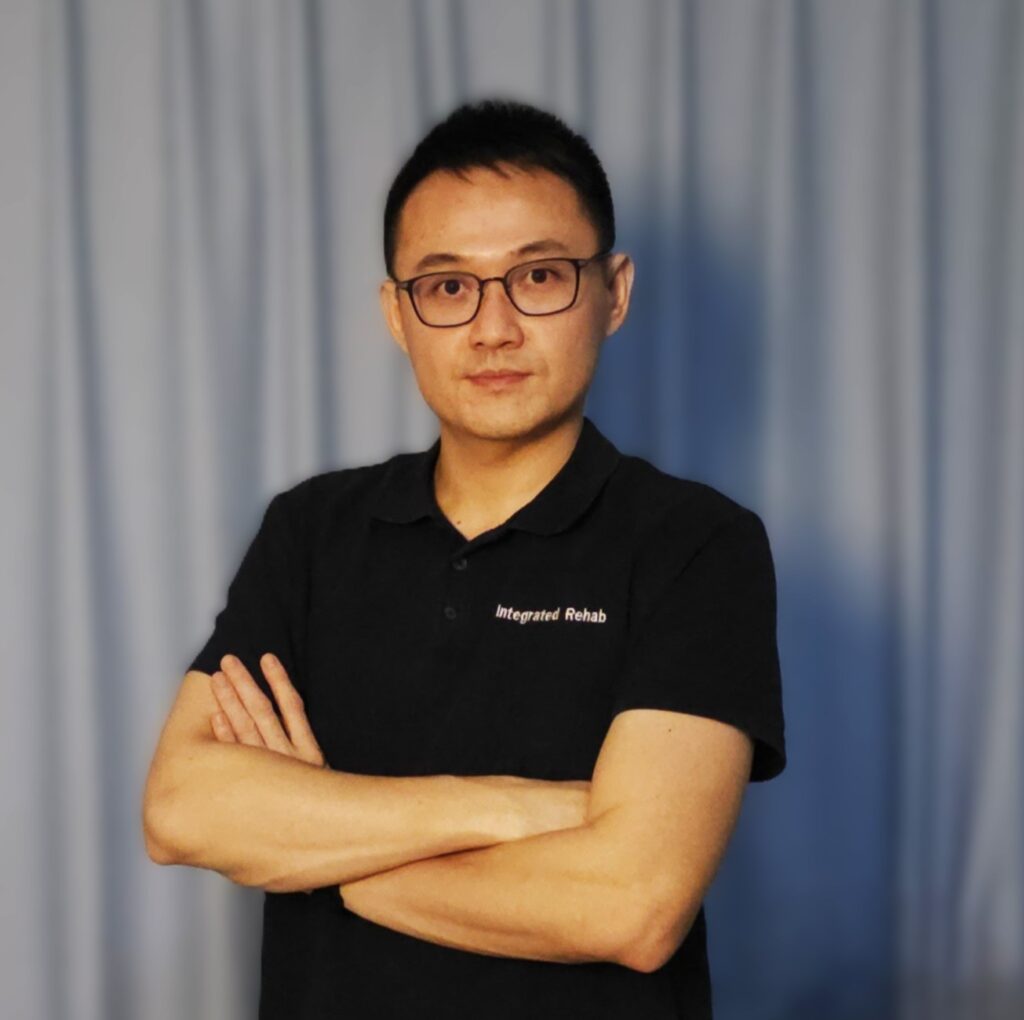
I am Simon Tan, a Malaysia-registered Occupational Therapist (MAHPC) with clinical experience since 2010. For the past 14 years, I have focused on chronic pain management, neurorehabilitation, and upper-limb functional recovery, especially for stroke survivors and individuals with long-standing movement limitations.
My clinical approach combines anatomical assessment, neuromuscular control training, and evidence-based manual techniques such as PNF (Proprioceptive Neuromuscular Facilitation), dry needling, and trigger point therapy to restore efficient, pain-free movement.
Professional Credentials
Education
Bachelor of Science in Occupational Therapy Kaohsiung Medical University (KMU), Taiwan
Certifications
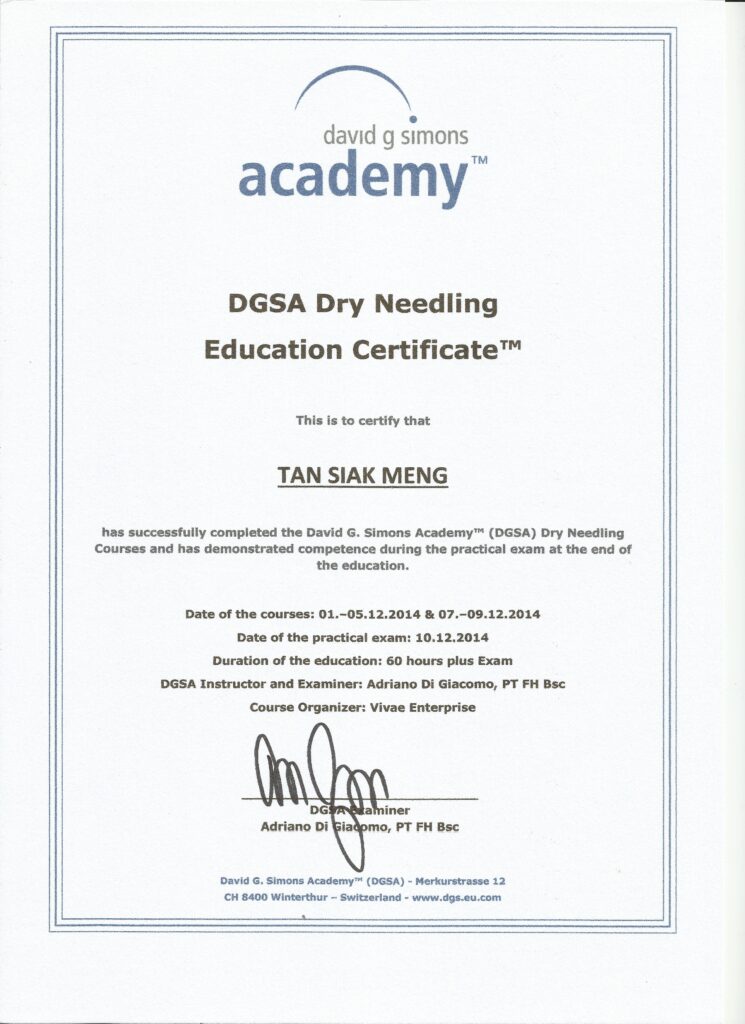
DGSA Certified Dry Needling Therapist(2014)
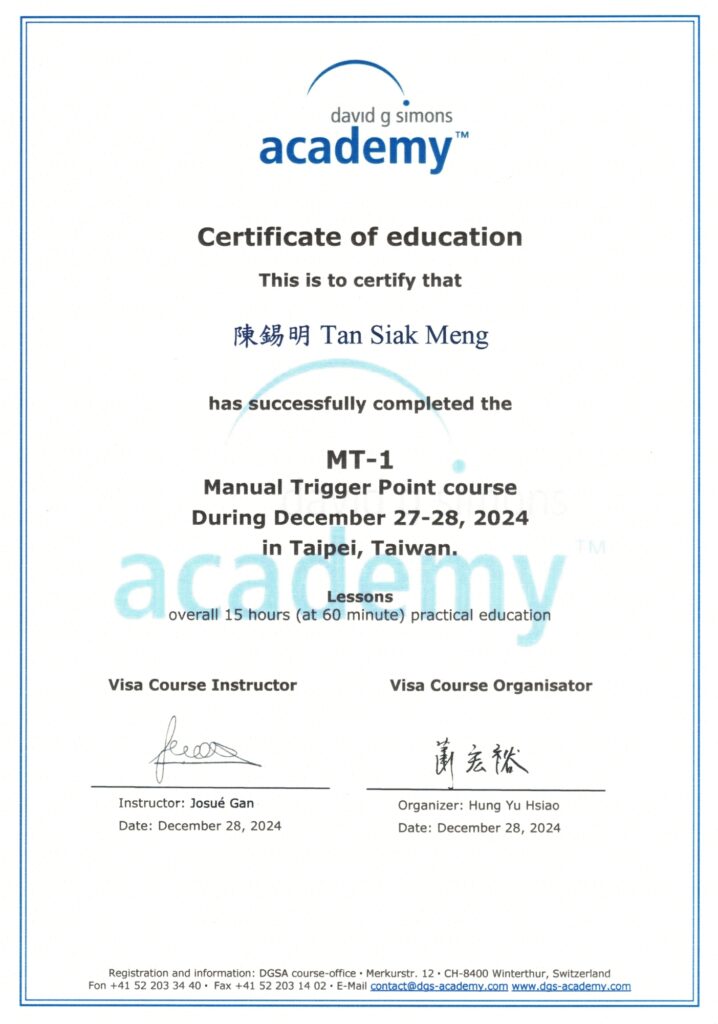
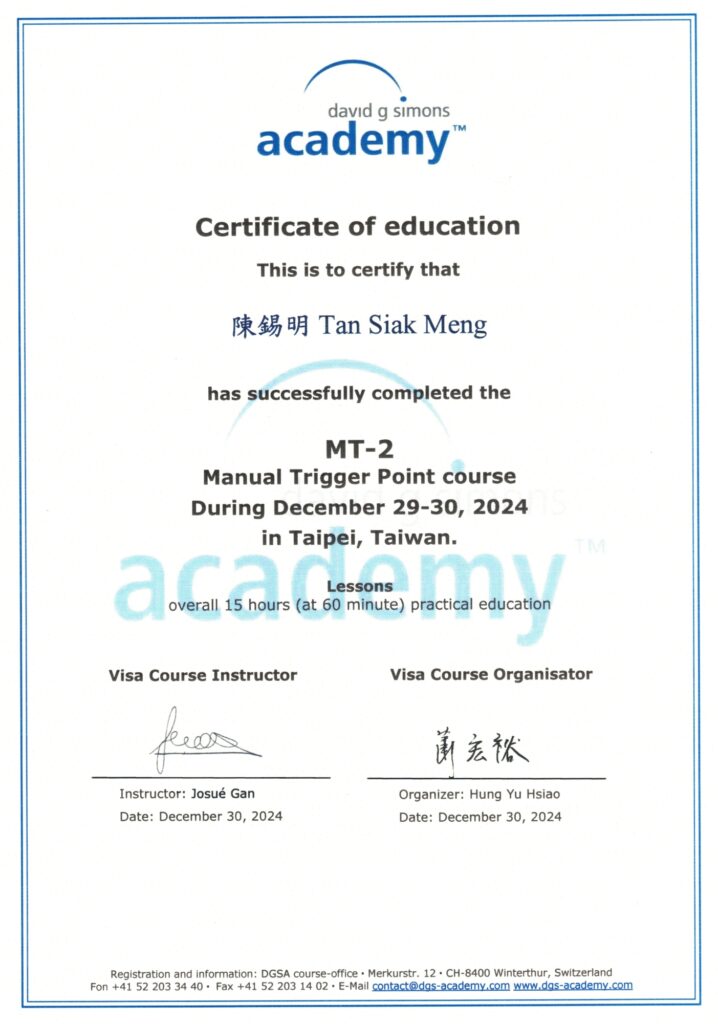
DGSA Manual Trigger Point Therapy(2024)
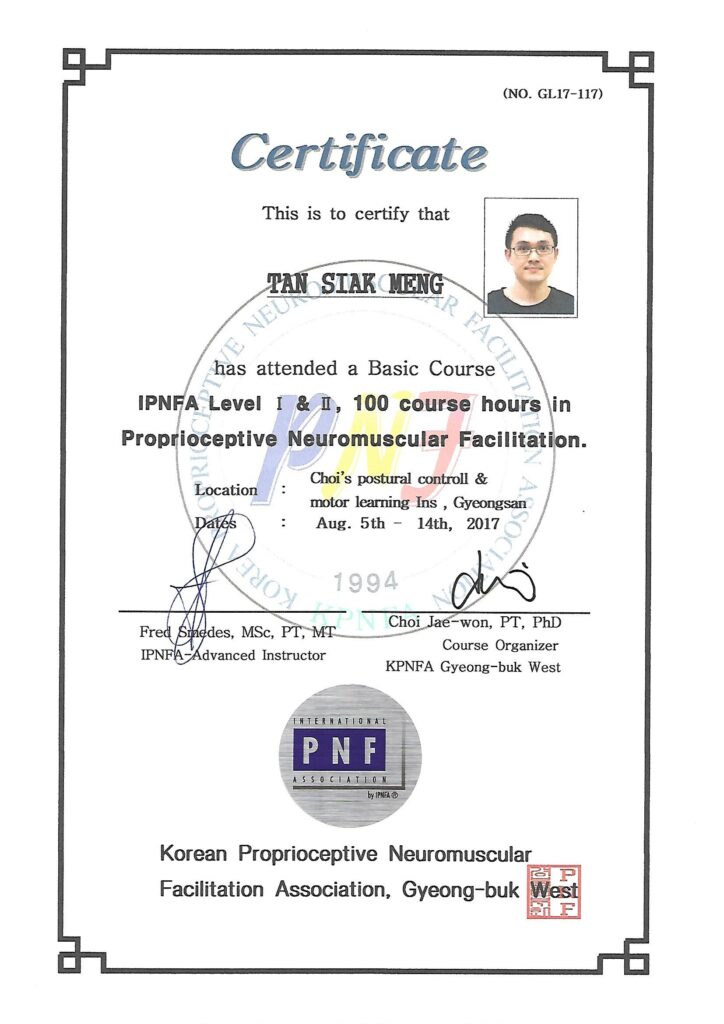
IPNFA PNF Level 1 & Level 2 Certification (2017)
BTE Functional Capacity Evaluation (2012)
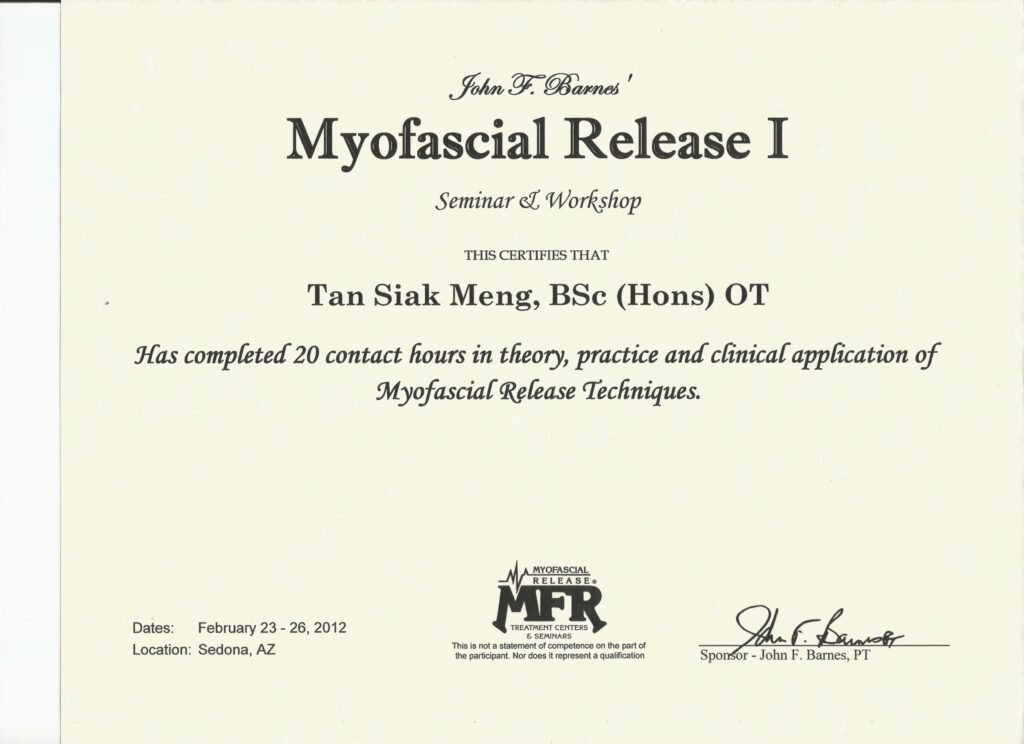
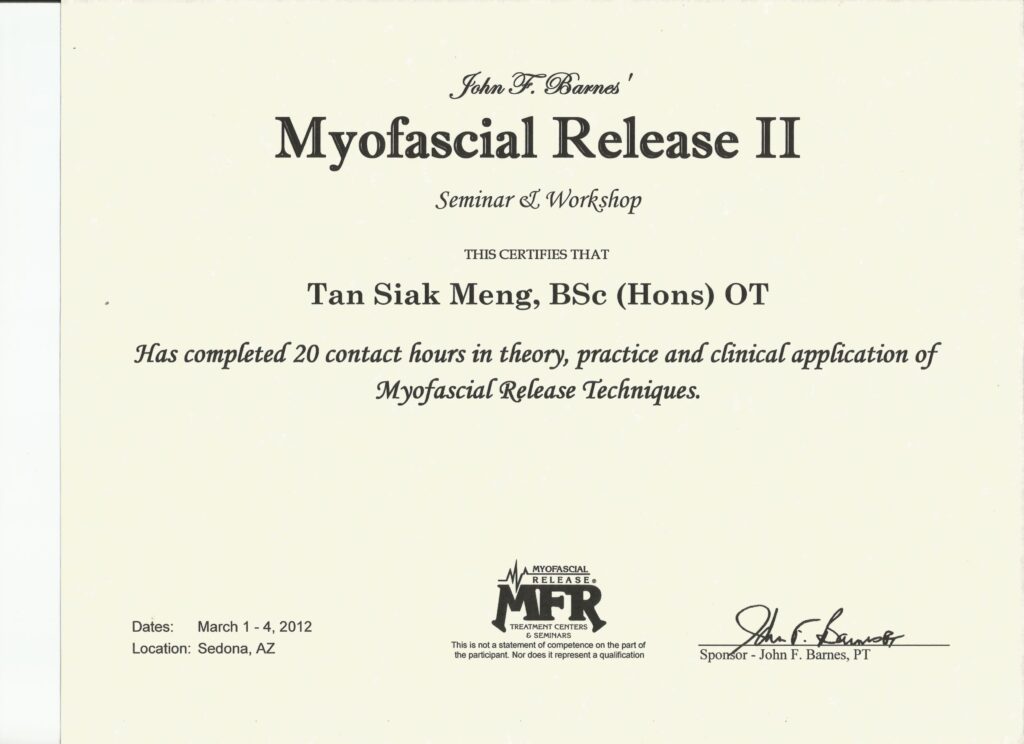
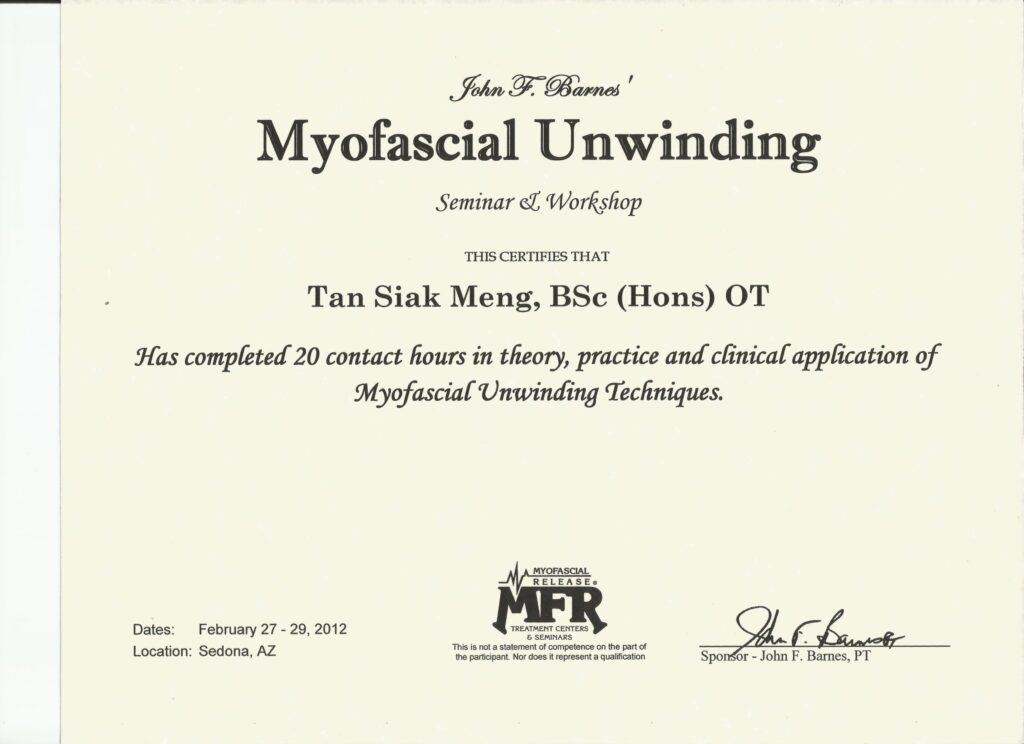
John F. Barnes Myofascial Release Therapy(2012)
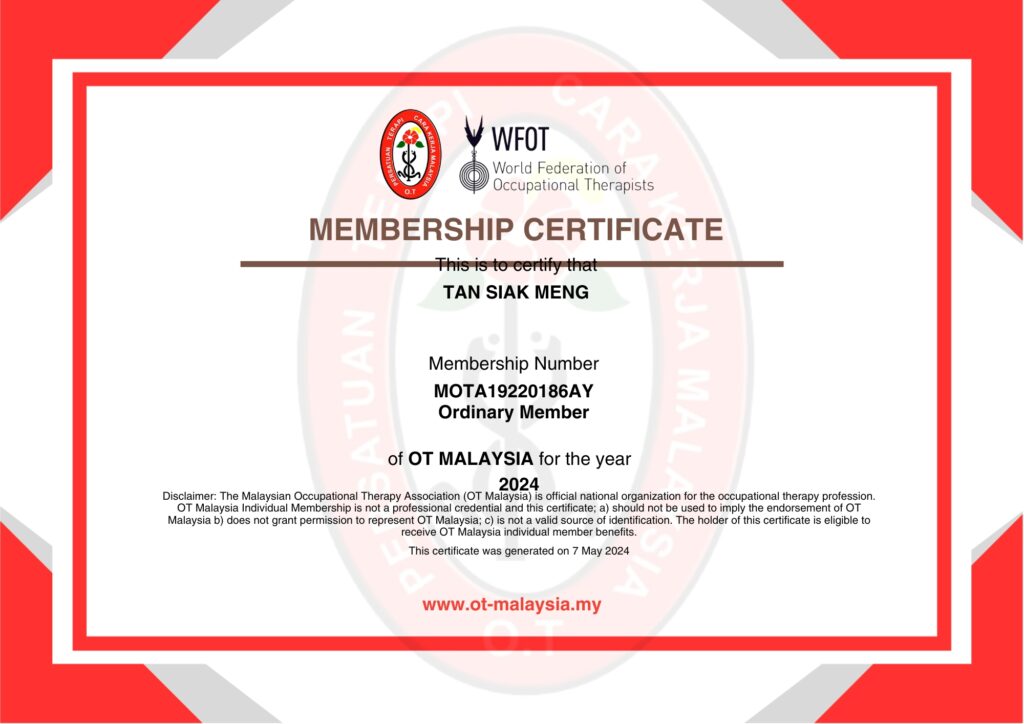
WFOT & OT Malaysia Registered Member
Clinical Experience
Occupational Therapist, Sau Seng Lum Rehabilitation Centre (Work Rehabilitation Department), 2010–2017
Founder & Senior Therapist, Integrated Rehabilitation and Wellness, 2018–Present
Clinical Philosophy
For Chronic Pain Management
Muscles, fascia, ligaments, tendons, periosteum, nerves, joints and tendon sheaths can all generate pain when they are irritated or injured. Through careful, step-by-step assessment and clinical testing, we look beyond the surface symptoms to identify the true source of your pain.
My goal in occupational therapy is more than pain relief. Starting from your everyday posture, movement patterns and work habits, I look for the underlying drivers of your pain and gradually break the vicious cycle of pain, guarding and stiffness. By restoring active muscular control and coordinated movement, I help you return to a more independent, active and confident life — at home, at work and in the community.
For Neurological Rehab
After a stroke, the issue is not that patients “don’t want to move.” It is that the brain temporarily loses its ability to control the affected muscles. During this phase, passive movement alone is often not sufficient to promote meaningful recovery.
The core of neurological rehabilitation is to activate weak or impaired muscles, and gradually rebuild the connection between the brain and the body. Through proper facilitation, targeted stimulation, and task-oriented functional training, the brain can relearn how to control movement—allowing the affected limb to regain strength, coordination, and purposeful action over time.
For Cognitive Rehab
Cognitive abilities may decline due to brain injury, neurological conditions, or the natural aging process. Through a structured cognitive assessment, we identify difficulties in areas such as attention, short- and long-term memory, executive function, and spatial orientation.
Cognitive rehabilitation focuses on targeted, individualized training to strengthen these abilities. The goal is to enhance the brain’s processing capacity, improve daily functional performance, and help patients regain clearer thinking, better judgment, and greater independence in everyday life.