After a stroke, many people are surprised by how quickly they start doing everything with the stronger arm. At first this makes sense: the affected arm feels heavy, clumsy or almost impossible to control. Reaching for a cup with it can be slow and frustrating, while using the stronger arm is fast and successful.
Over time, this natural shortcut can turn into something deeper. The brain gradually “chooses” not to use the weaker arm at all, even when some movement has returned. This pattern is known as learned non-use. It is one of the reasons why an arm that has potential stays quiet in daily life.
This article explains what learned non-use is, how it develops, why it matters, and how occupational therapy and structured practice can gently invite the affected arm back into real activities.
What is learned non-use after stroke?
Learned non-use is a behavioural and brain-based phenomenon. Early after a stroke, when the arm is very weak or flaccid, attempts to move it usually fail. Movements are slow, inefficient, or barely visible. Every try takes a lot of effort and may feel embarrassing or discouraging.
At the same time, using the stronger arm is easy and successful. The brain quickly learns a simple rule: when I use the affected arm, I “fail”; when I use the stronger arm, I “succeed”. To avoid repeated failure, the brain starts to suppress attempts with the weaker arm and instead relies almost entirely on compensation.
Later, as the nervous system recovers and some movement becomes possible in the affected arm, the person often does not automatically test that limb anymore. The brain has already built a strong habit: “don’t bother with that arm”. This is learned non-use — a learned pattern of ignoring a limb that actually has more potential than daily behaviour suggests.
The result is a kind of vicious circle: less use leads to less practice, which leads to less improvement, which further reduces use.
How learned non-use affects daily life
In everyday routines, learned non-use can be subtle. If you watch a stroke survivor making coffee, washing, dressing or using a phone, you may notice that the stronger arm does almost everything. The affected arm hangs at the side, rests in the lap, or is tucked away in a pocket or sling.
This pattern influences more than just muscle strength. Because the affected arm is not invited into tasks, the brain receives less sensory and motor input from that side. Over time, the brain’s internal “map” of the weaker arm can become faint, making it even harder to control.
Functionally, learned non-use can mean:
- The person struggles with any task that truly requires two hands, such as cutting food, opening jars or lifting larger objects.
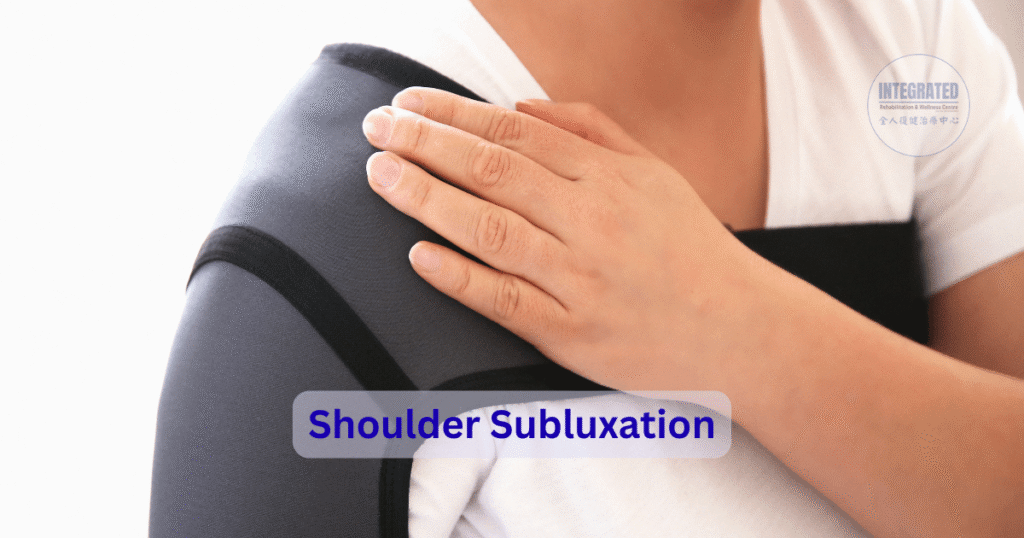
- The shoulder and elbow on the affected side may stiffen or become painful due to lack of active use.
- Balance and posture can be affected, because the body constantly leans on one side to do everything.
Perhaps most importantly, learned non-use can hide true potential. The arm may be capable of more than anyone realises, simply because it is not being given enough chances in meaningful situations.
Recognising the difference between “cannot” and “does not try”
One of the practical challenges in rehabilitation is distinguishing between what the arm truly cannot do yet, and what the person has simply stopped trying to do because of past failure.
A person with learned non-use might say, “I can’t move this arm at all,” yet when a therapist gently guides them, or when the right task is presented, you see small but real movement: a few degrees of shoulder lift, a slight elbow bend, or fingers that begin to open. These small abilities can be the starting point for change.
Therapists look for clues such as:
- Better performance when the person is given time and encouragement
- Small movements that appear when the task is meaningful (for example, reaching for a favourite cup)
- Improvements over a single session when the affected arm is deliberately used and positively reinforced
This does not mean the person is lazy or pretending. Learned non-use is a normal, understandable adaptation. The problem is that without guidance it can get stuck, limiting recovery that might otherwise be possible.
The role of neuroplasticity in reversing learned non-use
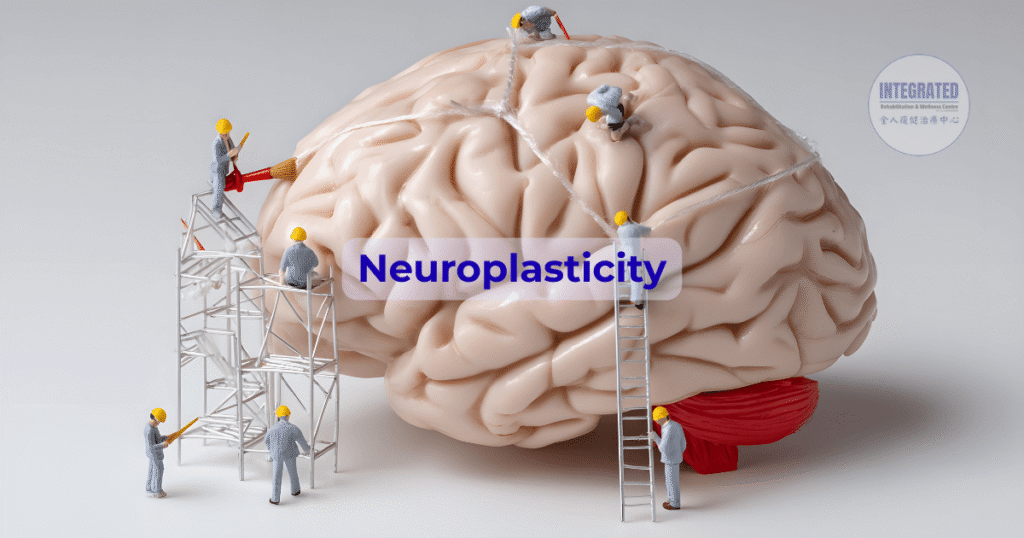
The concept of learned non-use is closely tied to neuroplasticity—the brain’s ability to reorganise and change based on experience. Early failure with the affected arm leads the brain to allocate less “attention and resources” to that limb. Later, if practice is shifted back towards the weaker arm in a consistent, meaningful way, the brain can learn a different rule: “when I use this arm, things can go well”.
This is why rehabilitation professionals emphasise repeated, task-specific use of the affected limb. Each time the weaker arm successfully participates in a functional task, the brain receives a positive message. Over many repetitions, this can encourage new or strengthened neural connections supporting movement and control.
The key is that practice should be:
- Focused on the affected arm as much as safely possible
- Structured but still linked to real-life tasks
- Intensive enough to challenge the brain, but not so overwhelming that it leads back to failure and discouragement
Constraint-Induced Movement Therapy: one response to learned non-use
One well-known approach designed specifically to address learned non-use is Constraint-Induced Movement Therapy (CIMT). The idea grew from research showing that animals and humans can develop learned non-use and that restricting the stronger limb, combined with intensive practice of the weaker one, can reverse this pattern.
In classical CIMT for stroke:
- The stronger arm is constrained (for example, with a mitt or sling) for a large proportion of waking hours.
- The weaker arm receives many hours of structured, therapist-guided practice over a concentrated period (often two weeks in the original protocols).
Clinical studies have reported improvements in functional use and upper limb ability after CIMT in selected adults with stroke who already have some active movement in the affected arm.
However, CIMT is not suitable for everyone. It usually requires:
- A minimum level of active movement in the affected hand and wrist
- Sufficient cognitive function and motivation to tolerate intensive practice
- Careful screening to ensure safety (for example, shoulder health, skin integrity, overall endurance)
Because of the time and resources required, modified versions (mCIMT) with shorter daily constraints and more home-based practice have been developed. These can sometimes offer a more realistic balance between intensity and practicality.
For many stroke survivors, elements of the CIMT philosophy—encouraging the weaker arm, reducing unnecessary compensation, and using meaningful tasks—can be integrated into everyday occupational therapy without a full formal CIMT programme.
Everyday strategies to gently counter learned non-use
Not all work against learned non-use needs to happen in a laboratory-style programme. Much of it can be woven into daily life, guided by an occupational therapist.
For example, instead of automatically using the stronger hand for every task, the person might:
- Use the affected arm to stabilise a bowl while the stronger hand stirs
- Place the weaker hand on the table and lean through it when sitting up
- Practise reaching for light objects placed slightly towards the affected side
- Involve the weaker hand in grooming or dressing, even if it only does part of the movement
The idea is not to force success in every attempt, but to create frequent opportunities for the affected arm to be noticed, moved and included. Family members can help by:
- Placing commonly used objects so that reaching with the affected arm is invited
- Offering encouragement and patience when tasks are slower
- Avoiding the habit of doing everything for the person “because it’s quicker”
An occupational therapist can help design these strategies in a way that respects safety, fatigue and the person’s priorities.
Balancing use and safety
While increasing use of the affected arm is important, it must always be balanced with joint protection and comfort. For some people, especially those with more severe weakness, shoulder pain, spasticity or a high risk of falls, aggressive efforts to “force” the arm can do more harm than good.
This is why professional guidance is so valuable. A therapist can:
- Assess how much movement and strength are currently present
- Check the health of the shoulder, wrist and hand
- Decide how far to challenge the arm and when to rest
- Suggest supports (such as slings, splints or taping) if needed, while still encouraging safe active use
The goal is not to ignore the stronger arm completely, but to reduce unnecessary over-reliance on it and make practical space for the weaker arm whenever reasonable.
When to ask about learned non-use
If you notice any of the following after a stroke:
- The affected arm is almost never used in daily tasks, even though some movement is present
- The person insists they “can’t” use the arm, but you see small movements in certain situations
- The stronger arm does absolutely everything, and the weaker arm is ignored or hidden
- Progress in upper limb function seems to have stalled, despite some early gains
it may be helpful to talk with your rehabilitation team or occupational therapist specifically about learned non-use and whether targeted strategies might help.
An assessment can clarify what portion of the difficulty is due to true motor limitation, and what portion might be due to habits and avoidance that could be gradually changed.
A realistic, hopeful perspective
Learned non-use after stroke is not a sign of failure or lack of willpower. It is the brain’s understandable response to early difficulty and discouragement. The problem is that this early adaptation can linger long after the arm has gained more potential.
The encouraging message is that learned non-use is not fixed. With the right blend of information, structured practice, gentle challenge and support from therapists and family, many stroke survivors find that their weaker arm can do more than they first believed.
Progress may be gradual, and not every arm will return to full function. But each increase in useful movement—holding a cup with both hands, steadying clothing, reaching to a shelf, carrying a light bag—represents a step away from learned non-use and a step towards more active, engaged living.
This article is for general education and does not replace individual medical advice. For personalised assessment and recommendations, please consult your rehabilitation team or a qualified healthcare professional.