After a stroke, recovery can feel confusing and unpredictable. Some days the arm or leg moves better, other days everything feels heavy and uncooperative. Families often ask, “Where are we now?” and “Is this normal?”
One way therapists describe motor recovery, especially for the arm and leg, is through the Brunnstrom Stages. This is a classic framework that breaks recovery into six “stages”, based on how movement and muscle tone change over time. It is not a perfect scale and it does not predict exactly what will happen, but it can help make sense of what you are seeing.
This article explains the Brunnstrom 6 Stages in everyday language, what they mean for stroke recovery, and how therapists use this model in rehabilitation.
Where the Brunnstrom Stages come from
The Brunnstrom approach was developed by Swedish physical therapist Signe Brunnstrom, who carefully observed patterns of motor recovery after hemiplegic stroke. She noticed that many people followed a similar progression in the way movement returned and spasticity appeared and then faded. Based on these observations, she described six stages of motor recovery, focusing on the arm, hand and leg.
Today, therapists may use different assessment tools and guidelines, but the Brunnstrom Stages are still widely taught because they give a simple, structured way to describe how far voluntary control has developed and how much abnormal “synergy” patterns are still present.
It is important to remember: Brunnstrom Stages are a description, not a guarantee or a timeline. People can move between stages at different speeds, and real-life function is influenced by many other factors such as sensation, balance, cognition, motivation and overall health.
Stage 1 – Flaccidity and silence in the limb
In Stage 1, the affected arm and leg are typically flaccid. There is no noticeable active movement, and muscle tone is very low. The limb may feel heavy, loose and difficult to control. If you lift the arm, it may simply drop when you let go. Reflexes can be absent or greatly reduced.
For families, this stage can be alarming. It may feel as though the arm is “dead” or that nothing will return. In reality, this is often an early phase. The brain is still in shock, pathways are disrupted, and swelling around the injured area has not yet settled. During this stage, therapists focus on positioning, protecting joints (especially the shoulder), maintaining range of motion, and providing gentle sensory input so that the brain continues to receive information from the affected side.
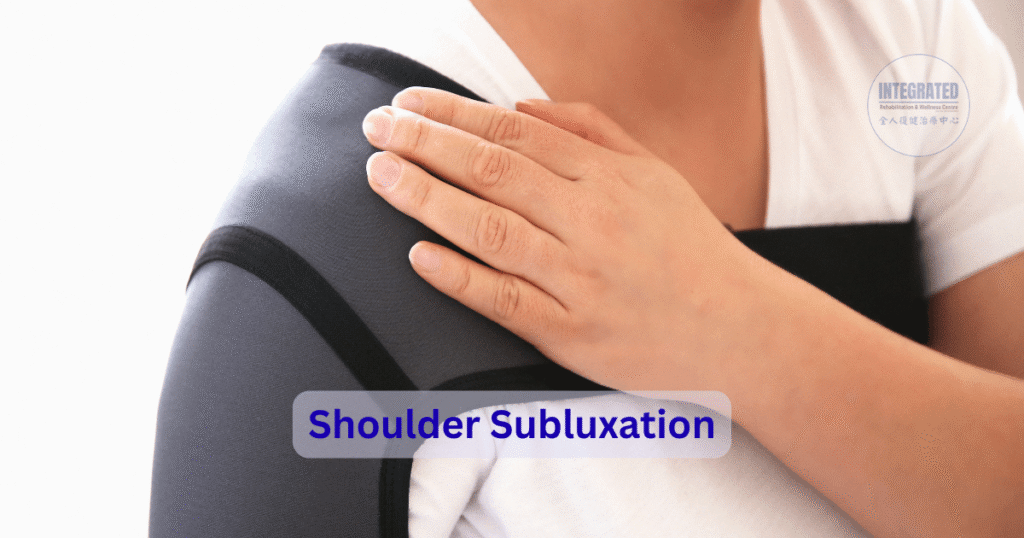
Even though there is no visible movement yet, the groundwork for later recovery is being laid. It is also the time when correct handling and support are essential to reduce complications such as shoulder subluxation and painful stiffness later on.
Stage 2 – Beginning of spasticity and basic “synergy” patterns
In Stage 2, small changes begin to appear. Muscle tone starts to increase and spasticity emerges, usually in a mild form at first. The person may show tiny, involuntary or reflex-like movements in the arm or leg, especially when trying to move or when stimulated by touch, yawning or effort.
These early movements often follow very basic patterns called synergies. For example, in the arm, the flexor synergy may pull the shoulder into some elevation and retraction, bend the elbow and flex the wrist and fingers. In the leg, an extensor pattern may straighten the knee and point the toes. At this stage, the person usually cannot control these patterns very well; the movement “comes out” as a whole.
Clinically, Stage 2 is sometimes described as the stage of minimal voluntary movement combined with beginning spasticity. It is a sign that the nervous system is waking up and that pathways are starting to conduct signals again, even though control is still very limited.
Stage 3 – Peak spasticity and strong synergies
In Stage 3, spasticity usually reaches its peak. The arm and leg may feel stiff, tight and resistant to passive movement. Movements, when they occur, tend to be locked into the synergy patterns: flexor synergy in the upper limb, extensor synergy in the lower limb. The person can often produce these synergy movements more deliberately, but has difficulty moving out of them.
For example, the person may be able to bend the elbow strongly in a flexor pattern, but cannot easily straighten the elbow smoothly or open the fingers independently. Standing and stepping may depend heavily on the extensor pattern in the leg, with the hip, knee and ankle wanting to move together as a unit.
This stage can be frustrating because spasticity and abnormal patterns are very visible. However, from a Brunnstrom perspective, Stage 3 also means there is now enough active force to work with. Therapists use this stage to start guiding that force into safer and more functional directions, combining stretching, positioning, and carefully graded tasks. The goal is not to fight the limb, but to gradually teach the nervous system more controlled options.
Stage 4 – Moving out of synergy, carefully and slowly
In Stage 4, spasticity is still present but begins to decrease, and the person starts to show movements that are not locked into the synergy patterns. This is a key turning point.
The person may now manage to straighten the elbow while the shoulder is in a different position, rotate the forearm, or bring the hand behind the body to some degree. In the leg, they may be able to bend the knee while the hip is in a different alignment, or move the ankle with more independence.
Movements are often slow, effortful and not yet smooth. They may still “fall back” into synergy when the person is tired or when the task is too difficult. Nevertheless, these early “out-of-synergy” movements show that the brain is building more refined control and is not relying solely on primitive patterns.
At this stage, rehabilitation focuses strongly on task-specific, functional practice. The arm might be used to help with dressing, reaching to shelves, supporting the body while sitting up, or stabilising objects during table-top tasks. The leg work may involve more precise stepping, weight shift and stair practice. The idea is to turn these new, less rigid movements into useful actions in everyday life.
Stage 5 – More complex, isolated movement
In Stage 5, spasticity continues to reduce further, and the person gains access to more complex combinations of movement. Joint motions can be performed more freely, and synergy patterns no longer dominate every attempt at movement.
For the arm, this may mean more controlled reach in different directions, better ability to rotate the forearm, improved opening and closing of the hand, and more accurate placing of objects. For the leg, it may show up as smoother walking, better foot clearance, and the ability to adapt steps to different surfaces or speeds.
At this point, the therapist’s role is to refine coordination, speed and accuracy, and to integrate the limb into higher-level daily tasks. This can include bimanual activities (using both hands together), simulated work tasks, community mobility, and complex balance challenges. Fatigue and effort still matter, and under stress the person might occasionally slip back into old patterns, but overall control is clearly better than in earlier stages.
Stage 6 – Near-normal movement with subtle limitations
In Stage 6, voluntary movement approaches normal in many situations. Spasticity is minimal or absent, and the person can perform isolated joint movements and complex sequences with good control and speed. They can usually adjust their movements to different tasks and environments without immediately falling into abnormal patterns.
However, Stage 6 does not necessarily mean 100% recovery. Some people still notice subtle differences between the affected and unaffected side: reduced endurance, fine motor difficulties, slight clumsiness in fast or precise tasks, or fatigue when they try to do too much. Others may manage very well in daily life but still find complex activities (such as certain sports or heavy manual work) more challenging.
Even in this stage, ongoing practice can be useful to maintain gains, support confidence and manage fatigue. Rehabilitation at this level often focuses on return to work, hobbies and community participation, not just basic self-care.
What the Brunnstrom Stages are not
Because the Brunnstrom Stages are often presented as “1 to 6”, it is easy to think of them as a staircase that everyone must climb in order, within a fixed time. Real life is more complicated.
First, not everyone starts in Stage 1 and ends in Stage 6. Some people may stabilise around Stage 3 or 4, yet still achieve a good level of independence with adapted strategies and assistive devices. Others may progress quickly through some stages and slower through others. The stages are a framework, not an exam.
Second, there is no universal timeline. Two people with similar strokes can move between stages at very different speeds. Variables such as stroke severity, location, age, general health, cognition, mood, and access to rehabilitation all influence the pattern.
Third, Brunnstrom focuses mainly on motor patterns, not on sensation, neglect, vision, language, memory or mood. A person might have good motor recovery but still struggle with attention, fatigue or planning, all of which affect daily life.
For these reasons, therapists use the Brunnstrom Stages as one part of a broader assessment. They help describe “how the limb is moving” today, but they do not define a person’s future or worth.
How therapists use Brunnstrom Stages in rehabilitation
When an occupational therapist or physiotherapist says, “Your arm is around Brunnstrom Stage 3,” they are using shorthand to describe what they see: strong synergy patterns, peak spasticity, some voluntary movement but not yet isolated control. That information helps them choose appropriate goals and exercises.
In Stage 1–2, the focus may be on protection, positioning, passive or assisted range, and early attempts at initiating movement. In Stage 3, treatment may harness available strength while gradually introducing movement out of synergy. By Stage 4–5, therapy usually becomes more intensive and task-focused, with many repetitions of meaningful activities. In Stage 6, the emphasis often shifts to higher-level skills, endurance, work and leisure.
Brunnstrom staging also helps the whole team communicate. Nurses, doctors and therapists can coordinate strategies—for example, how to handle the shoulder, when to encourage certain standing tasks, or how much support is needed for walking—based on a shared understanding of where the limb is in its motor recovery.
What this means for stroke survivors and families
For stroke survivors and families, knowing about the Brunnstrom Stages can make the recovery journey less mysterious. Recognising that spasticity and synergy patterns are part of a known process—not a sign that everything is going wrong—can be reassuring.
It is helpful to remember:
- A stage is a snapshot, not a verdict.
- Moving from one stage to another is often gradual; you may only notice the change when you look back over weeks or months.
- Real-life goals—being able to eat, dress, walk safely, use a phone, return to valued roles—are more important than the stage number.
If you feel stuck at a certain stage, talking with your rehabilitation team can clarify what is realistic, what else can be tried, and how home practice can be adjusted to stimulate further recovery, while also respecting energy, safety and quality of life.
A balanced perspective
The Brunnstrom 6 Stages offer a structured way to talk about motor recovery after stroke. They show how the nervous system can move from flaccidity, through spasticity and rigid patterns, towards more refined and flexible control.
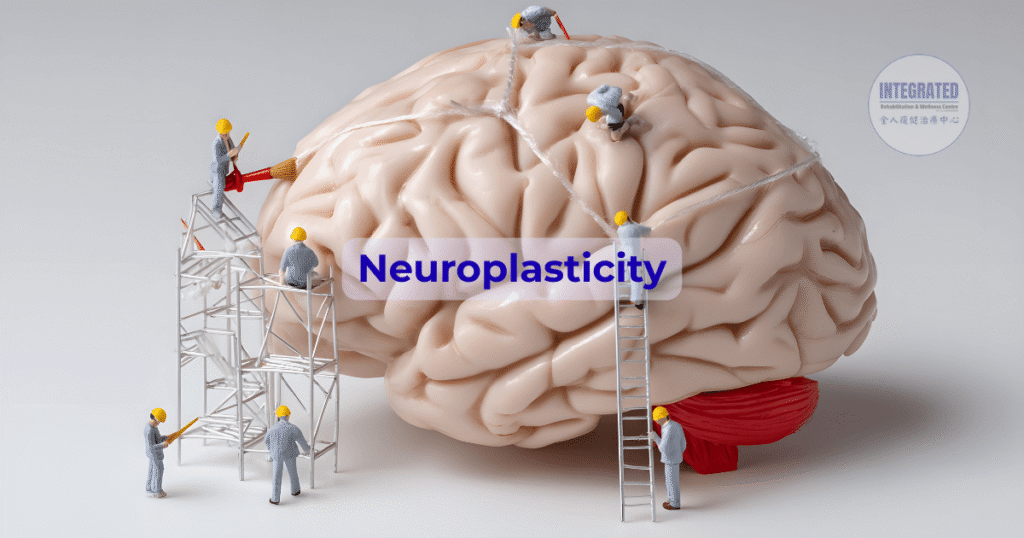
They do not promise a specific outcome, and they do not tell the whole story of a person’s recovery. But when combined with modern rehabilitation principles, neuroplasticity knowledge and an individualised therapy plan, they can be a useful map—one that helps guide expectations, plan treatment and remind everyone that change is possible, even when progress feels slow.
This article is for general education and does not replace individual medical advice. For personalised assessment and recommendations, please consult your rehabilitation team or a qualified healthcare professional.